Emporea blends kingdom strategy with hero-focused RPG combat
Emporea: Realms of War and Magic, developed by Pixel Federation, is a fantasy strategy role-playing game that asks players to build an empire and lead legendary heroes in persistent competitive realms. The core gameplay mixes city-building, resource management, army recruitment, and tactical battles across four playable races. Key systems include an extensive hero progression tree, alliance-driven warfare, periodic realm resets, and cross-platform account synchronization. The game targets MMORTS fans who favor long-term cooperative competition and collectible character growth.
What kind of game is Emporea compared with classic MMORTS?
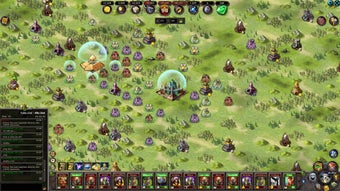
Emporea sits between a kingdom-management sim and a hero-centric RPG, shifting the player's attention between economic growth and tactical encounters. The title supports four playable races with distinct units, and it layers a deep hero system with more than 90 skills and 90 artifacts. Play sessions alternate between city planning, army composition, and character advancement, rewarding players who pursue sustained progression rather than quick skirmishes.
Does Emporea emphasize multiplayer and alliance warfare?
The game emphasizes cooperative play through a massively multiplayer alliance system that coordinates large-scale warfare and diplomacy. Persistent realms reset on a cycle, producing fresh competitive beginnings and a final challenge at each realm's end. Cross-platform account synchronization keeps individual progress accessible on Windows, mobile, and web, so groups can coordinate across devices instead of being confined to one platform.
What does Emporea run like on PC and mobile hardware?
Emporea targets modest hardware, listing minimum Windows requirements of a Pentium 4 2.5GHz, 1 GB RAM, and 300 MB storage, which aligns with its availability on browsers and mobile devices. Distribution includes Windows via Steam and web portals, enabling the same account across environments. Those technical choices favor wide accessibility and parity between desktop and mobile play rather than demanding high-end graphics horsepower.
Is it hard to get started and progress in Emporea?
Progression is deliberately long: city-building mechanics and the expansive hero trees place a premium on time investment and coordination. Success in later stages depends on assembling artifacts and unlocking skills, while alliance membership affects strategic options. Community-driven play and the game's scale mean players who prefer solo, short sessions may face slow advancement compared with those who join organized groups and commit to longer campaigns.
In summary, Emporea rewards patient, social strategists more than casual solo players
Emporea is a measured choice for players who enjoy sustained, group-oriented competition and methodical character growth. It favors teams that coordinate across devices and commit to long campaigns; players seeking quick, solo-focused matches should expect slower returns on progress. For anyone prioritizing social strategy and deep progression over instant gratification, the game presents a compelling, long-form experience.
.png)